
How a DSCR Loan Works for Rental Property in Moon Valley, Arizona
If you have looked at a rental in Moon Valley and hesitated because your tax returns do not tell the story your bank statements do, that hesitation makes sense. Investors with real income often look thin on paper after depreciation, write-offs, and a couple of entities running through the same return. A DSCR loan approaches the question from a different angle entirely, and it is worth understanding the mechanics before deciding whether the angle fits your situation.
The short answer
DSCR stands for debt service coverage ratio. It is a single number: the property's expected rental income divided by the property's own housing cost, meaning principal, interest, taxes, insurance, and any HOA dues. A ratio of 1.00 means the rent exactly covers that cost. Above 1.00 means the property carries itself with room left over.
What DSCR actually measures
DSCR stands for debt service coverage ratio. It is a single number: the property's expected rental income divided by the property's own housing cost, meaning principal, interest, taxes, insurance, and any HOA dues. A ratio of 1.00 means the rent exactly covers that cost. Above 1.00 means the property carries itself with room left over.
That is the entire qualifying question on this loan type. The lender is underwriting the asset's ability to pay for itself rather than your personal ability to pay for it out of pocket.
So a W-2, a tax return, and a debt-to-income calculation are typically not the center of the file. The lease, the market rent, and the property's own numbers are.
Why Moon Valley properties get evaluated the way they do
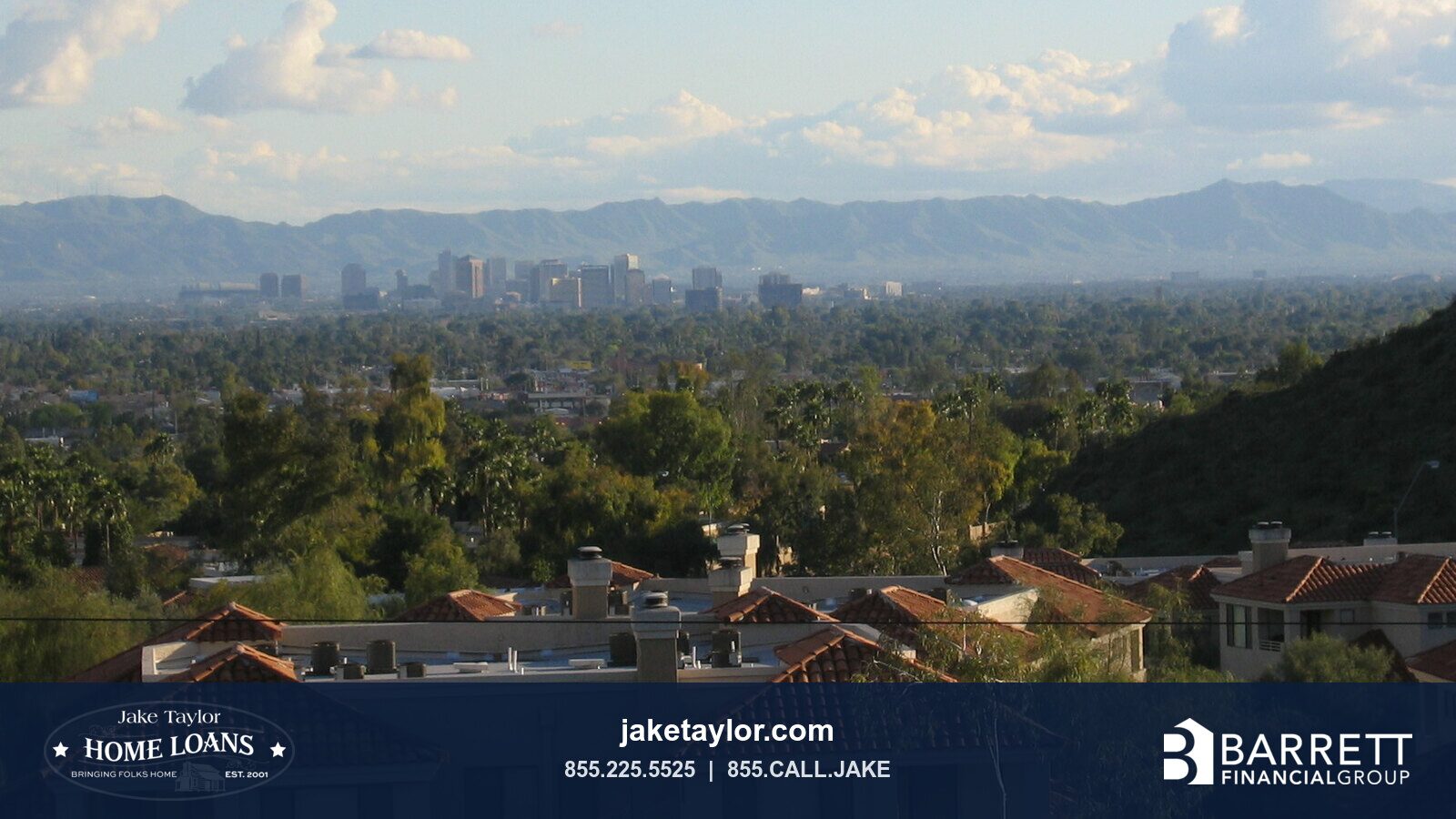
Moon Valley sits in north Phoenix with a housing stock that skews toward established single-family homes, larger lots, and a mix of long-held owner-occupied properties and rentals. That matters because DSCR underwriting leans heavily on a rent estimate, usually a market rent schedule produced with the appraisal, and comparable rental data is only as good as the neighborhood's rental activity.
In a pocket where most homes are owner-occupied and turnover is slow, the appraiser has fewer rental comps to work with. That does not stop the loan, but it does mean the rent figure carries more weight and deserves more attention from you before an offer, not after.
If you already have a signed lease at a defensible rent, that document often carries meaningful weight alongside the market rent estimate. Knowing which number the file will use is worth asking early.
Where the ratio lands and what changes when it moves
Programs vary, but most set a floor the ratio has to clear, and then price and structure improve as the ratio rises above that floor. A property that comfortably covers itself is a different file than one sitting right at breakeven, even though both may technically qualify.
Two levers move the ratio. One is rent, which is largely set by the market and by how the property shows. The other is the monthly obligation, which moves with the loan amount, the taxes, the insurance, and the rate. Arizona property taxes and rising insurance premiums both sit inside that denominator and are frequently underestimated by investors modeling a deal quickly.
This is where borrowers with real equity and reserves have room others do not. Bringing more capital to the transaction lowers the obligation, lifts the ratio, and can change which tier of pricing the file lands in. That is a strategy conversation, not a qualifying emergency.
What DSCR loans ask for that agency loans do not
Because the property is doing the qualifying, the lender protects itself elsewhere. Expect meaningful attention to reserves, meaning liquid funds held after closing, often measured in months of the property's housing cost. Expect the property to be held in a way the program permits, since many DSCR programs allow or prefer title in an LLC.
Expect prepayment structures as well. Many DSCR products carry a prepayment penalty for an initial period, which is a real cost if your plan is to sell or refinance quickly. If you intend to hold, it may cost you nothing at all. Either way, it is a term to read closely rather than skim.
These loans are generally not sold to Fannie Mae or Freddie Mac, so the rules come from the individual investor behind the program. That is why two lenders can quote the same borrower very differently on the same property.
How this fits alongside equity you already hold
Many Moon Valley investors are not starting from zero. They are sitting on a primary residence or an existing rental that has appreciated substantially, and the real question is how to convert some of that equity into the next acquisition without disturbing a good existing loan.
A cash-out refinance on one property and a DSCR loan on the next are two separate transactions that often get planned together. Sequencing matters, because the cash-out proceeds may need to season in your account before they count as reserves or funds to close on the second file.
Thinking through that order before either application is submitted usually saves more money and stress than shopping a quarter point. You can read more about how we approach this on the loan options page.
Questions people actually ask
Does a DSCR loan look at my personal income at all?
What if the property is not rented yet?
Can I hold a Moon Valley rental in an LLC with this type of loan?
Is a DSCR loan available outside Arizona?
Keep learning

Jake Taylor
Loan Officer · NMLS #162265

Want to run the numbers on a specific property?
If you have a Moon Valley address in mind, the useful next step is putting real taxes, real insurance, and a defensible rent estimate into the ratio and seeing where it lands. Call 855-CALL-JAKE (855-225-5525) and we can walk through it. No application required to have the conversation.